The WK Series is a microcellular polyurethane elastomer: a dense, uniform network of micro-cells whose walls are made of a high-strength, highly elastic PU matrix. Six grades run from soft to stiff; the number in each grade name is its static bedding modulus (N/mm³ × 100). Used in rail transit, building acoustics and machine isolation.
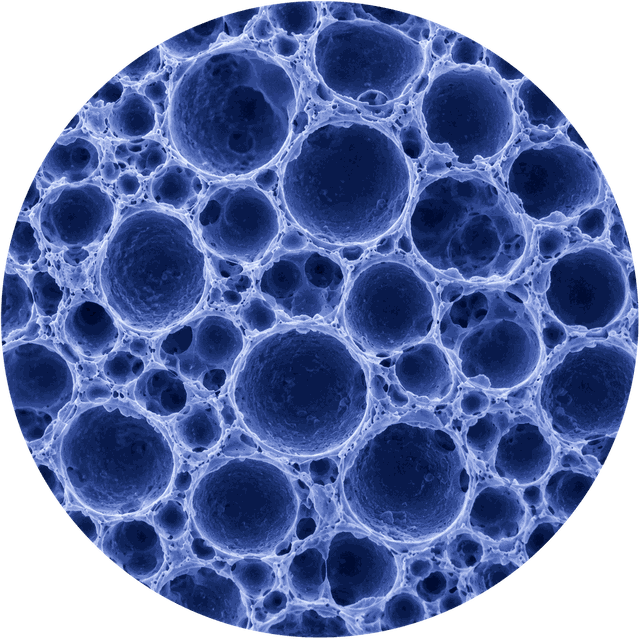
Unlike solid elastomers, boards made of WK material are volume-compressible under load and expand very little sideways. That makes them ideal as continuous mats that support machines, floor slabs or track structures evenly over a large area.
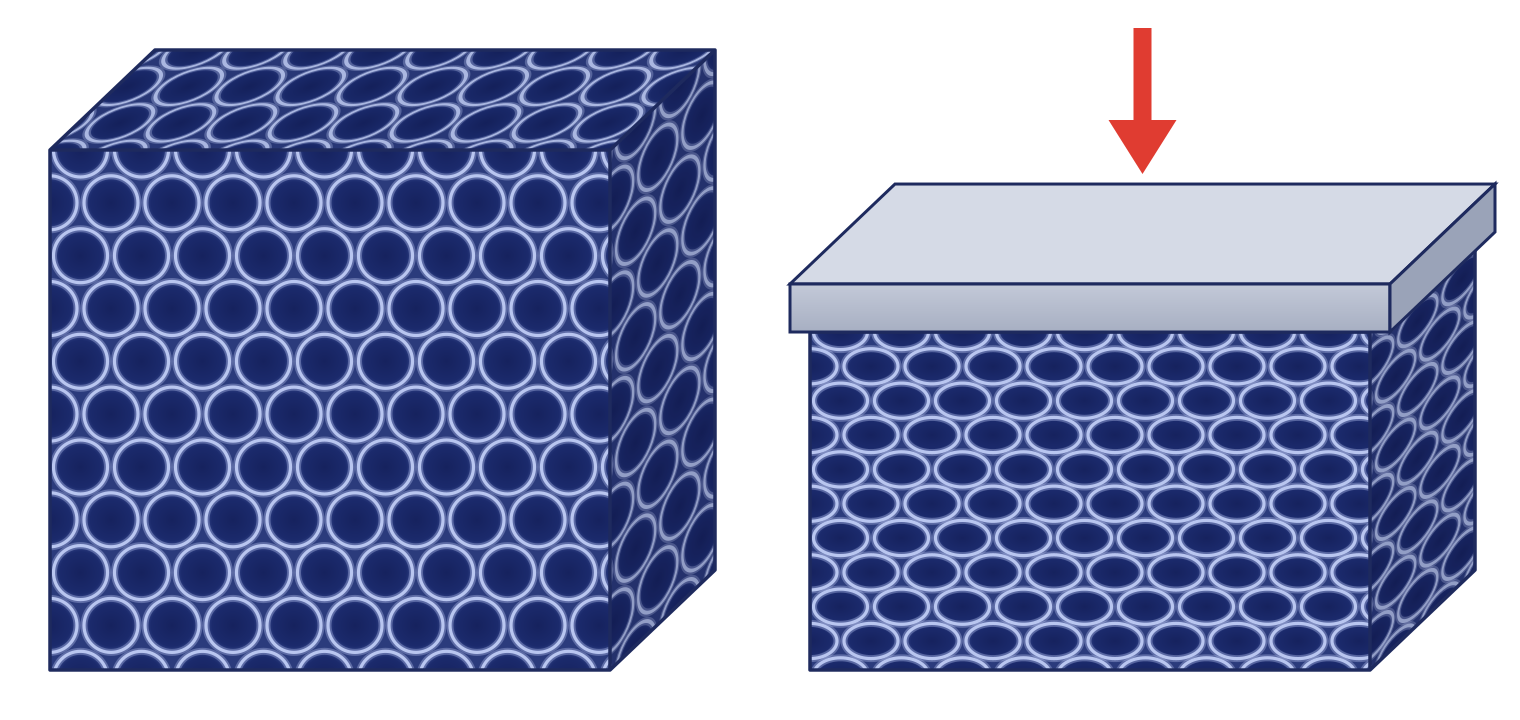
Cell walls flex like countless tiny springs, carrying the load and recovering when it is removed.
As the cells deform, viscoelastic hysteresis of the PU matrix turns part of the vibration energy into heat.
Spring and damping in a single material: no separate dampers, a compact build-up and simple installation.
Soft to stiff (static bedding modulus 0.03–0.22 N/mm³), selected by contact pressure and target load.
Balances resonance control with isolation efficiency at higher frequencies.
Low deflection and stable stiffness under long-term load, so performance lasts.
Avoid prolonged UV exposure; humid-ageing data and special temperature conditions available per project.
Resilient and tough, resisting tears during installation and service.
The material does not conduct electricity and suits supports needing electrical separation; insulation can be tested per project.
| Aspect | Steel springs | Solid rubber | WK microcellular PU |
|---|---|---|---|
| Damping | Very low; extra dampers often needed | Moderate | Balanced; no separate dampers needed |
| Lateral bulging | — | Significant; needs room | Small; volume-compressible |
| Support type | Point | Point / strip | Point, strip or full-surface |
| Low-frequency isolation | Excellent | Fair | Good; designed by grade and thickness |
| Build-up height | Tall | Medium | Low; thin layers suffice |
Qualitative comparison based on general engineering practice; confirm by design calculation and testing.
The number in each grade name is its static bedding modulus (N/mm³ × 100). The table lists the main specifications of each grade; the test report for each batch applies.
| Property | Unit | Standard | WK-003 | WK-006 | WK-009 | WK-013 | WK-016 | WK-022 |
|---|---|---|---|---|---|---|---|---|
| Static bedding modulus ¹ | N/mm³ | GB/T 39705-2020 | 0.03 | 0.06 | 0.09 | 0.13 | 0.16 | 0.22 |
| Contact pressure (relative) | — | — | Very light | Light | Light–med. | Medium | Med.–heavy | Heavy |
| Dynamic / static ratio | — | GB/T 39705-2020 | < 1.3 | < 1.3 | < 1.3 | < 1.3 | < 1.3 | < 1.3 |
| Reference density ² | kg/m³ | GB/T 6343 | 200–300 | 300–400 | 400–500 | 500–600 | 600–700 | 700–800 |
| Tensile strength | MPa | GB/T 10654 | ≥ 0.5 | ≥ 0.8 | ≥ 0.8 | ≥ 0.8 | ≥ 1.0 | ≥ 1.2 |
| Elongation at break | % | GB/T 10654 | ≥ 150 | ≥ 220 | ≥ 180 | ≥ 170 | ≥ 150 | ≥ 150 |
| Compression set | % | GB/T 10653 | < 5 | < 5 | < 5 | < 5 | < 5 | < 5 |
| Appearance | — | GB/T 39705-2020 | Flat, smooth surface; no crumbling, cracks, delamination or soiling; defects from inclusions, bubbles or flow marks ≤ 50 mm² | |||||
| Dimensional tolerance | — | — | Length ±1 %, width ±1 %, thickness ±1 mm | |||||
¹ Measured on 25 mm product; grade number = static bedding modulus × 100 ² Reference density; if a grade is made denser, its tensile strength and elongation requirements rise accordingly. ≥, ≤ and < values are specification limits.
σ = machine mass × g ÷ support area
Deflection s = σ ÷ C; a lower bedding modulus C is softer
25 mm standard; n stacked layers give about 1/n of C
f/f₀ must exceed √2; aim for ≥ 2.5
With a single 25 mm layer, f₀ would be about 15.7 Hz (f/f₀ ≈ 1.6) and isolation only about 32 %; four layers (100 mm) bring f₀ to about 7.9 Hz and isolation to about 89 %. Final selection should use the test report and measured curves for the grade, and account for eccentric loads, dynamic loads and installation conditions.
Suggested grades are a first guide; final selection depends on load, excitation frequency and conditions of use. Transport and new-energy uses require passing the relevant industry tests.
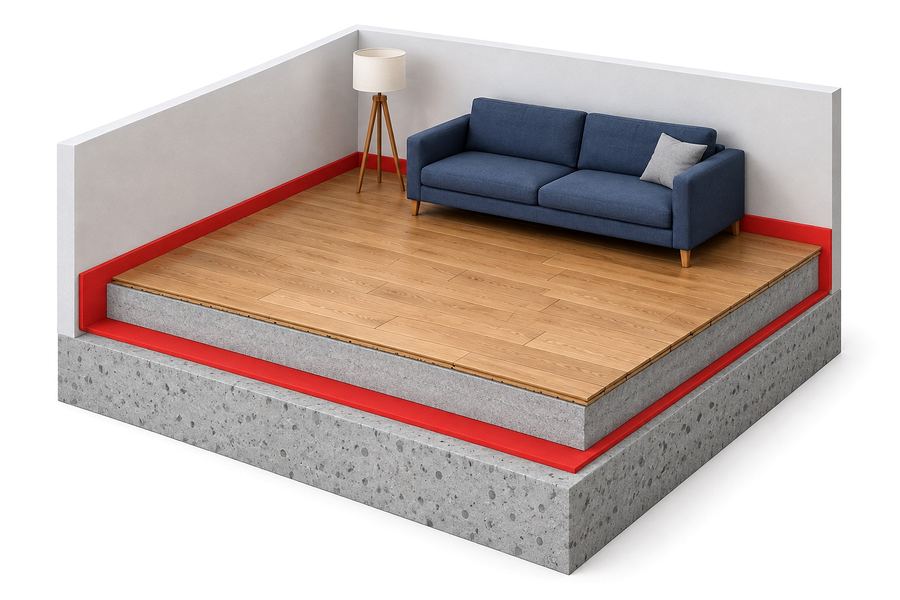
Laid between structural slab and screed to stop footfall and impact noise reaching the floor below.
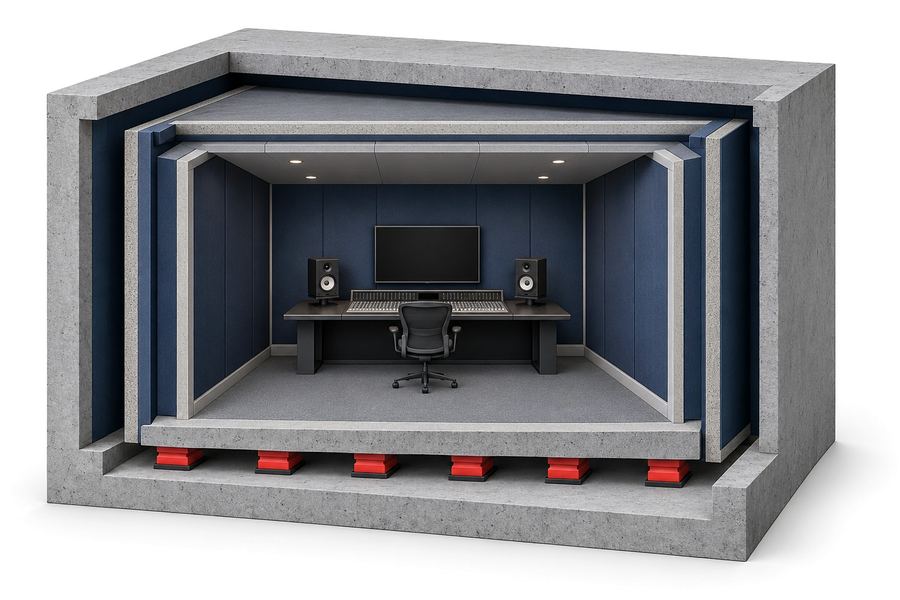
Recording studios, cinemas and broadcast rooms float on a resilient layer, decoupled from the main structure.
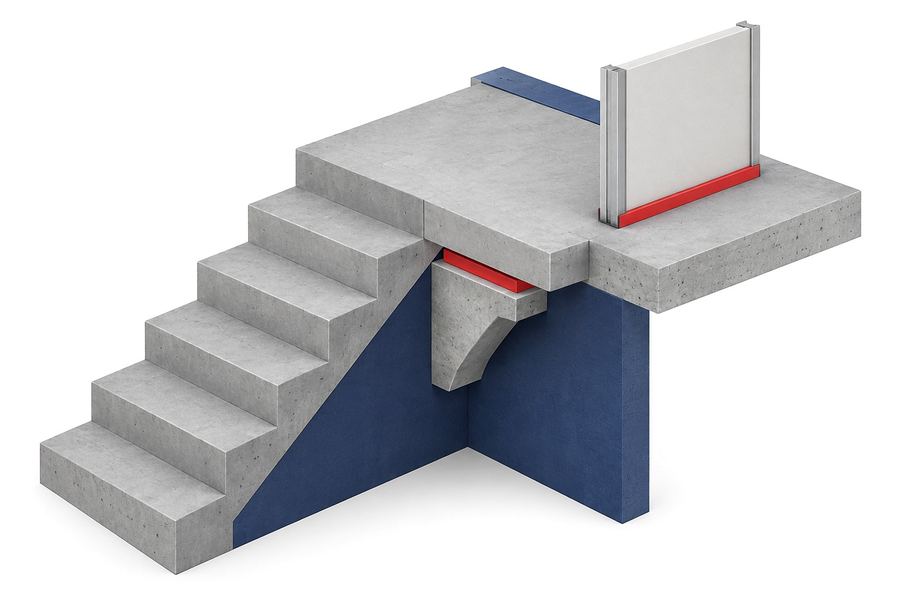
Under stair landings, flight bearings and lightweight walls to break structure-borne sound paths.
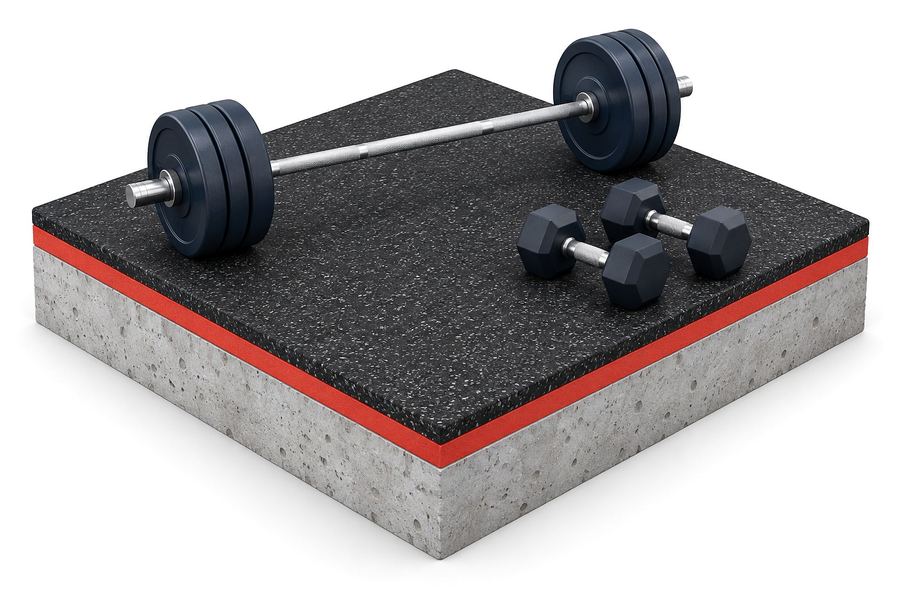
Absorbs dropped barbells and dumbbells, reducing vibration and noise in the spaces below.
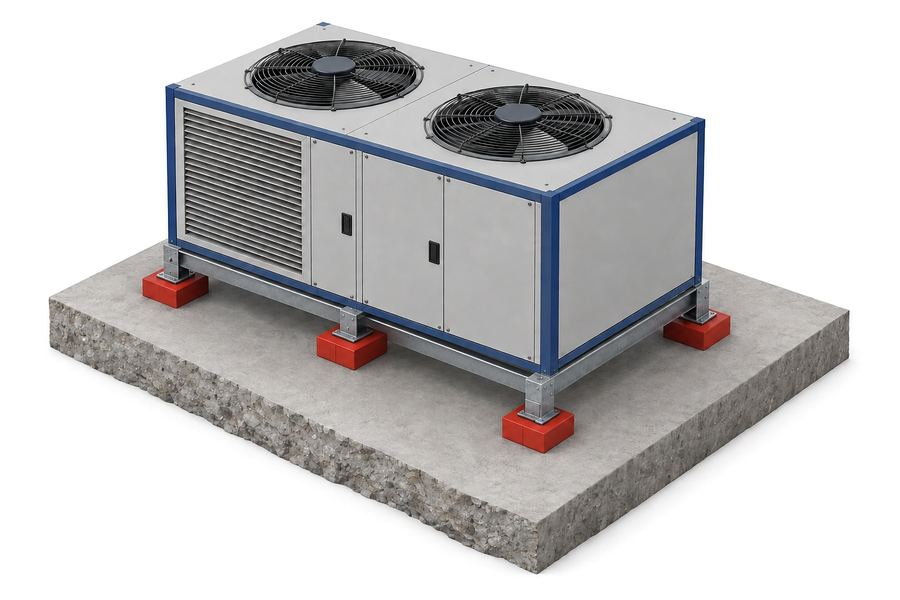
Isolates rooftop and plant-room equipment, cutting vibration and noise into the building.
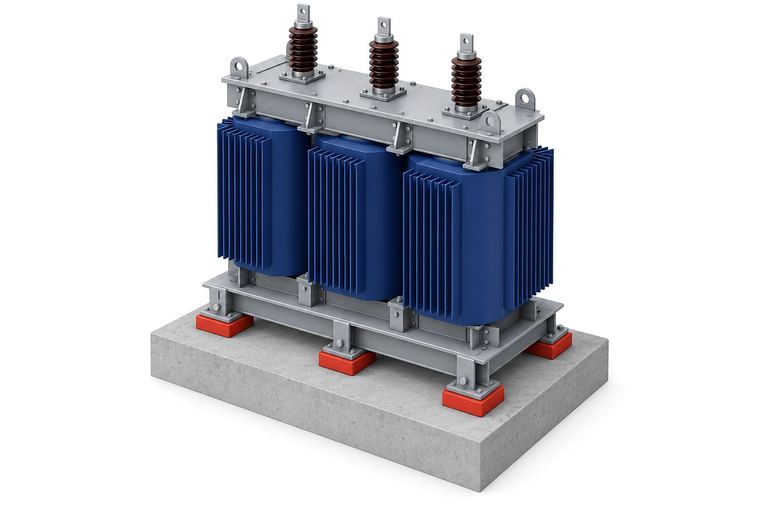
Reduces low-frequency magnetic hum and running vibration transmitted into the structure.
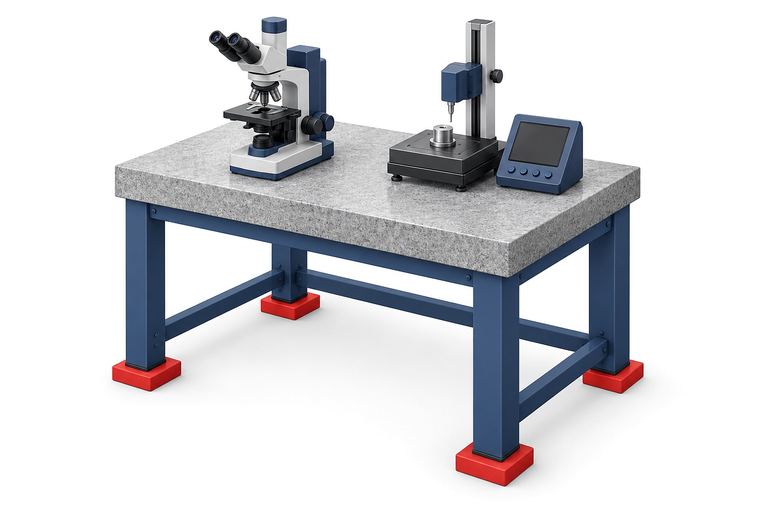
For general lab and metrology equipment; demanding low-frequency cases need a dedicated design.
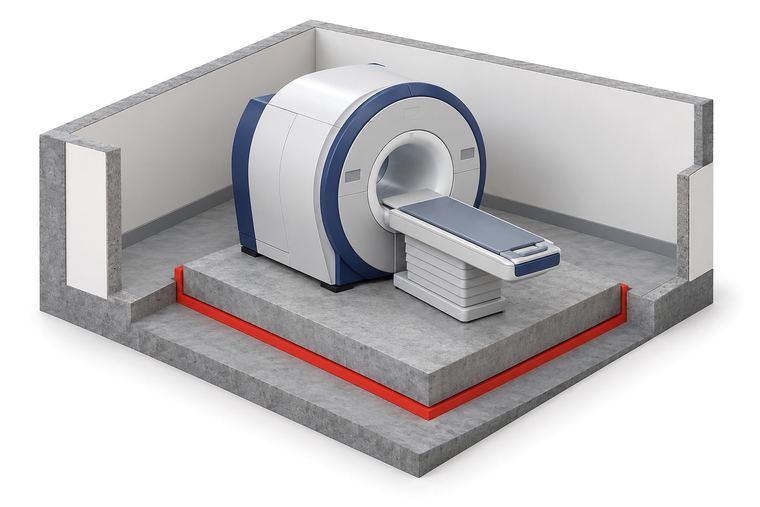
Foundation isolation for MRI, CT and other large medical systems.
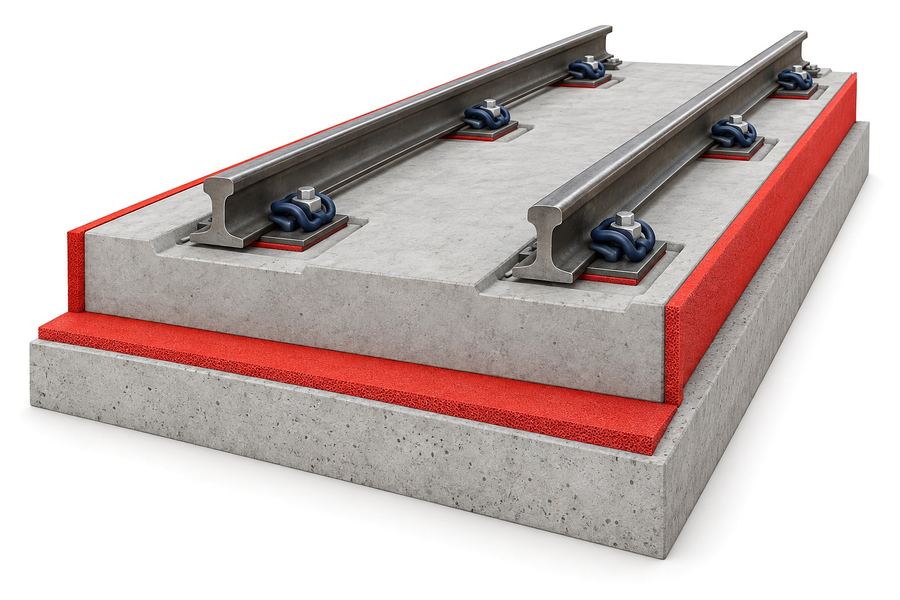
Laid between the track slab and the base on metro and light-rail lines, ballasted or ballastless, reducing train vibration passed into tunnels, bridges and nearby buildings; tested to GB/T 39705-2020.
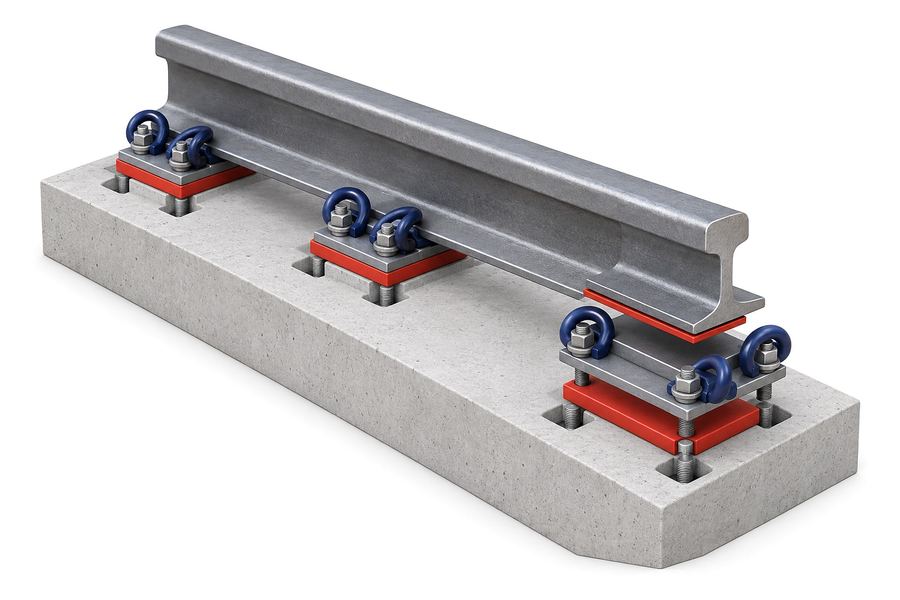
Rail pads and baseplate pads for high-speed rail fastenings, in a dedicated high-density formulation, reducing wheel–rail vibration and noise passed into the track.
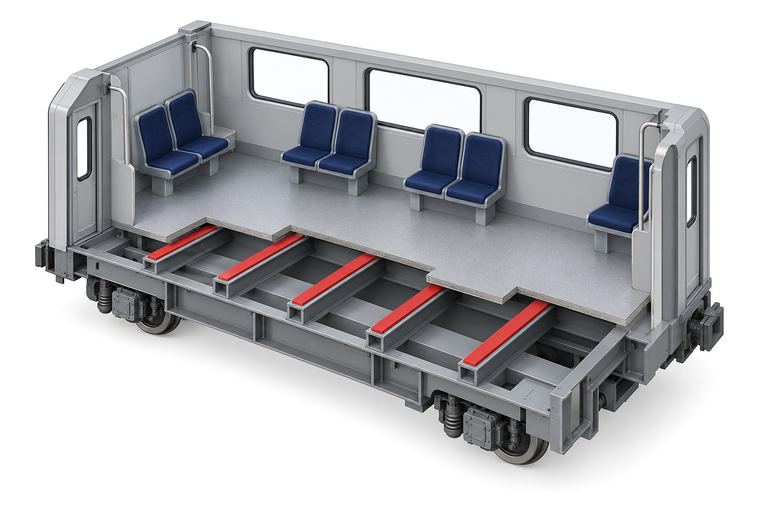
Floating floors for metro and high-speed train cars, reducing interior vibration and noise.
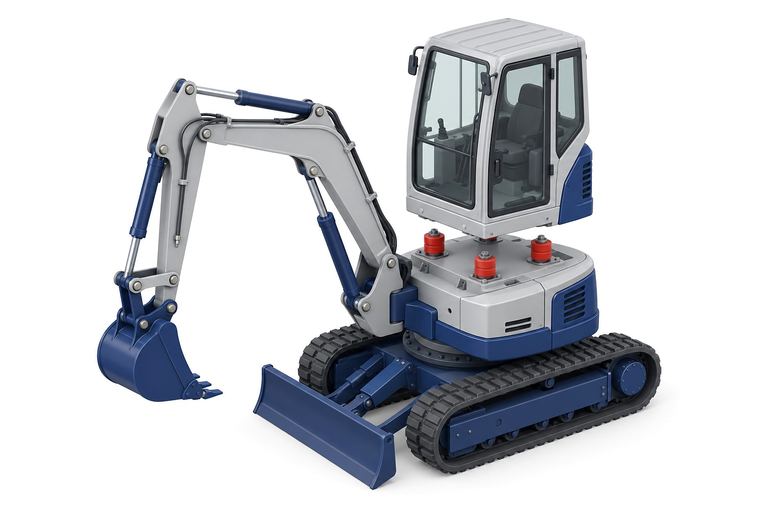
Resilient mounts for construction machinery and commercial vehicle cabs, improving operator comfort.
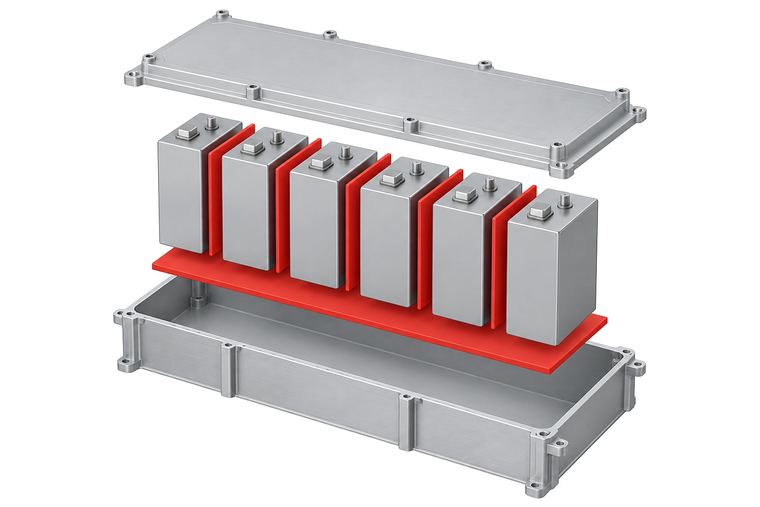
Between cells or under modules to absorb swelling and shock; dedicated flame-retardant thin sheet.
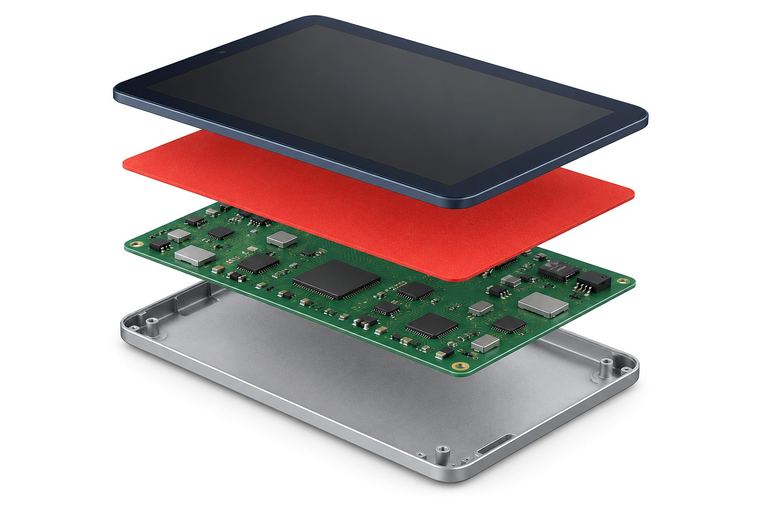
Cushioning pads and dust seals for displays and devices; dedicated thin sheet.
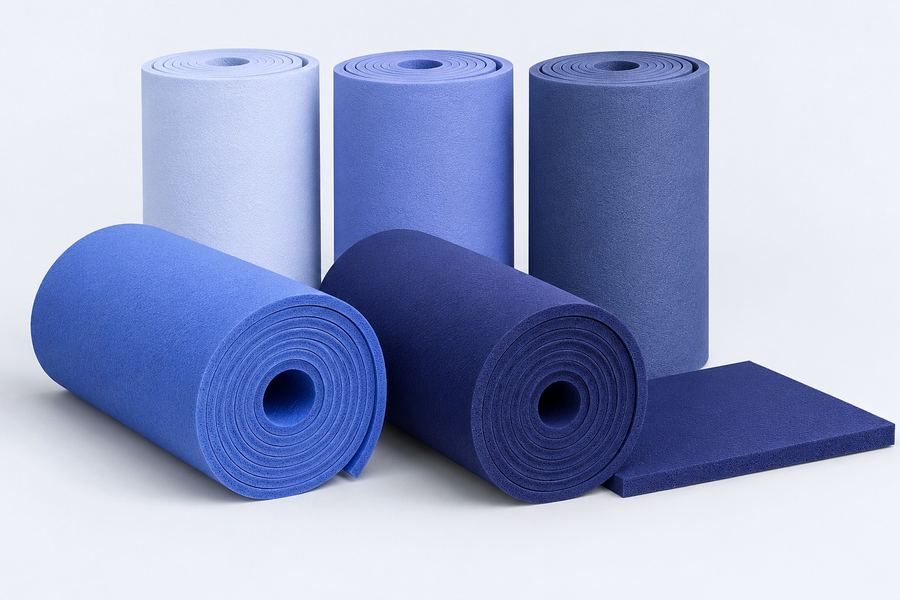
1.5 m wide, 5.0 m long
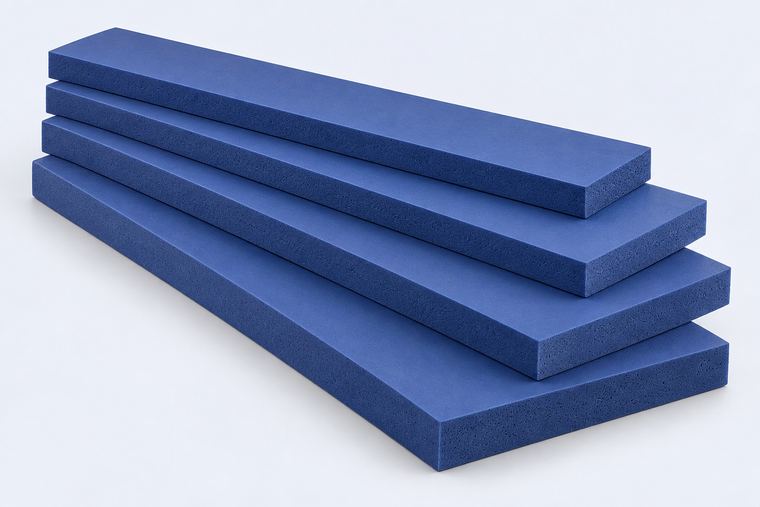
up to 1.5 m × 5.0 m
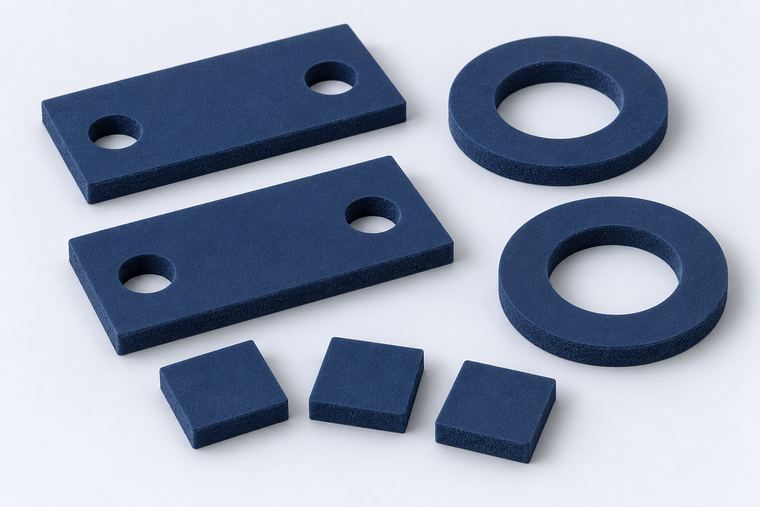
cut to drawing
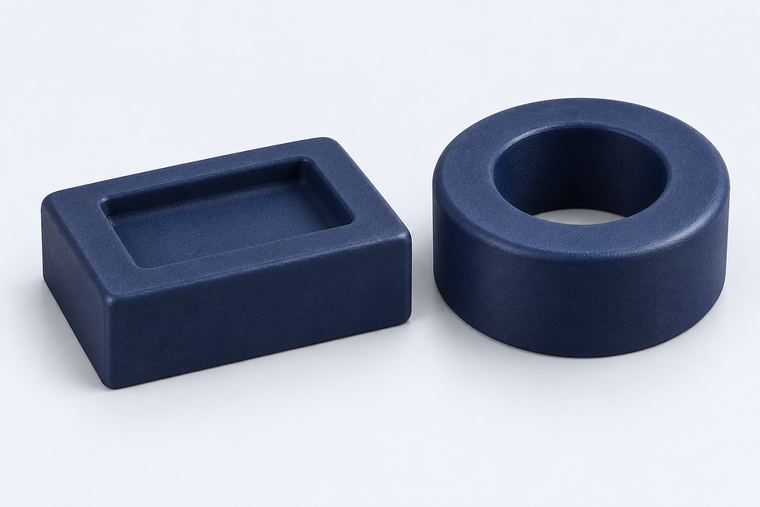
moulded to drawing
| Standard thickness | 25 mm; layers can be stacked for greater thickness |
| Sheets | 1200 mm × 1000 mm |
| Rolls | 1.5 m × 5.0 m |
| Strips | width up to 1.5 m, length up to 5.0 m |
| Custom parts | Die-cut and moulded parts; other sizes on request |
| Colour coding | By grade, for easy identification on site |
| Tolerances | Length ±1 %, width ±1 %, thickness ±1 mm |
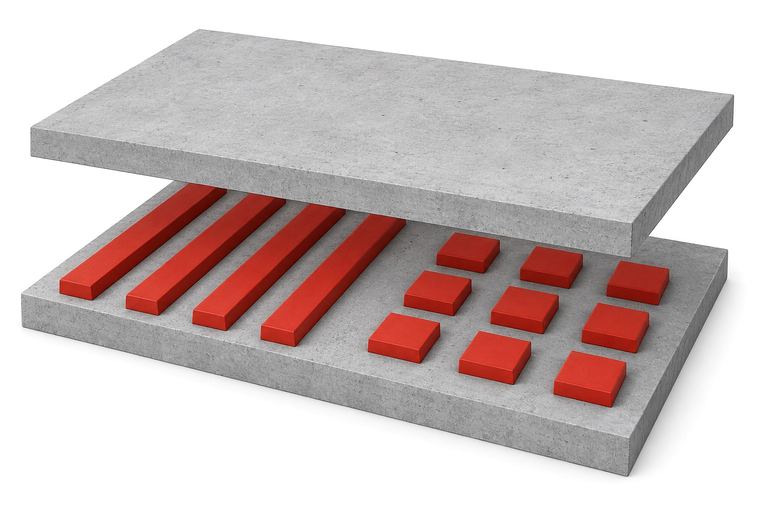
Strip / pad support
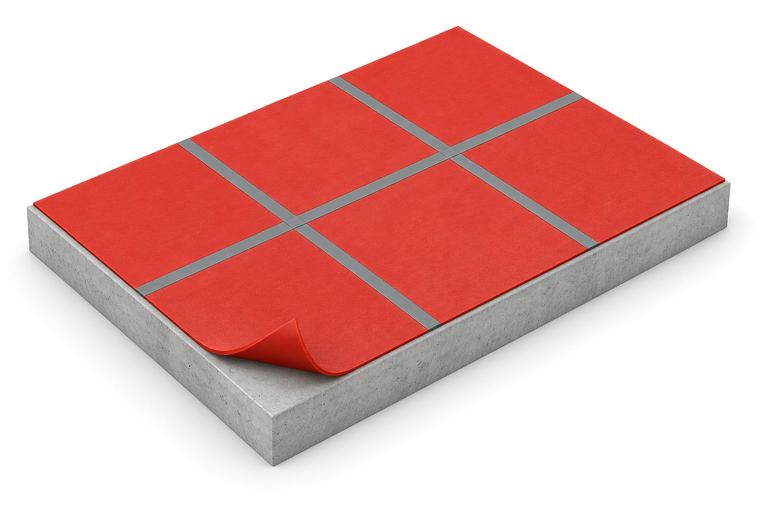
Full-surface laying
The WK Series is developed in our technical centre, equipped with universal tensile testers and climate chambers for formulation validation, incoming inspection and release testing. Dynamic properties are tested by third-party laboratories.
| Test | Reference standard | Performed by |
|---|---|---|
| Density | GB/T 6343 | In-house |
| Static bedding modulus | GB/T 39705-2020 | In-house |
| Dynamic bedding modulus, dynamic/static ratio | GB/T 39705-2020 | Third-party lab |
| Tensile strength, elongation | GB/T 10654 (ISO 1798) | In-house |
| Compression set | GB/T 10653 (ISO 1856) | In-house |
| Appearance, dimensional tolerance | GB/T 39705-2020 | In-house |
Note: values are specification limits; the test report for each batch applies. Images are illustrative. For test reports, samples or custom grades: +86 757 8666 8171 · Mobile/WhatsApp +86 134 1573 8784 (Li Zelin) · leiqizhile@gdlqzl.cn